Know it when you see it
Successful control begins with accurate identification. ALG often hides in plain sight, and grazing pastures hold 'good' tussock grasses that look similar. Learn the tell-tale features to protect East Gippsland's productivity and biodiversity.
Five features that give it away
No single trait is proof on its own, but together these five set African Lovegrass apart from the pasture and native grasses it hides among. Learn to read them as a set.


A cycle dictated by the season, not the calendar
Dormant below 10°C soil temperature. Two main flush periods, autumn and spring, but in a wet, humid summer it can germinate rapidly.
Learn to spot the young plants
Relying on seed heads means the plant has already reached a reproductive stage. Developing an eye for young plants, their colour and small, soft leaves, lets you treat infestations before they feed the seed bank.
Grasses it's mistaken for
Several grasses in East Gippsland pastures share a tussocky, weeping look, and some are valuable natives you'd never want to spray. Three checks tell African Lovegrass apart from almost all of them.
Sandpaper leaves
Run a finger down the blade toward the base; ALG feels distinctly rough and scratchy. Most native tussocks feel smooth or only lightly ribbed.
Flat, leaden-grey seeds
The individual seeds (spikelets) are noticeably flattened, and the open, branched seed head fades to a dull leaden grey. Poa and native grasses keep rounder, plumper, often silvery or purplish seeds.
White ligule hairs, no runners
A fringe of fine white hairs sits where blade meets stem, and ALG spreads only by seed; it never creeps by rhizomes or stolons the way bent grass does.

African Lovegrass
What to look for: Densely tufted, weeping, with rough leaves and an open grey seed head that flattens between the fingers.

Poa Tussock
How it differs: Rounder, plumper spikelets and soft, smooth silvery-green leaves. A valued native; leave it be.

Bent Grass
How it differs: Finer, softer and much shorter, with a delicate airy panicle. Spreads by runners into mats rather than lone tussocks.

Weeping Grass
How it differs: A drooping, one-sided seed head with fine awns and soft bright-green blades. Often found in shade.

Wallaby Grass
How it differs: Fluffy white cotton-tuft seed heads on a neat, compact tussock with soft leaves.

Spear Grass
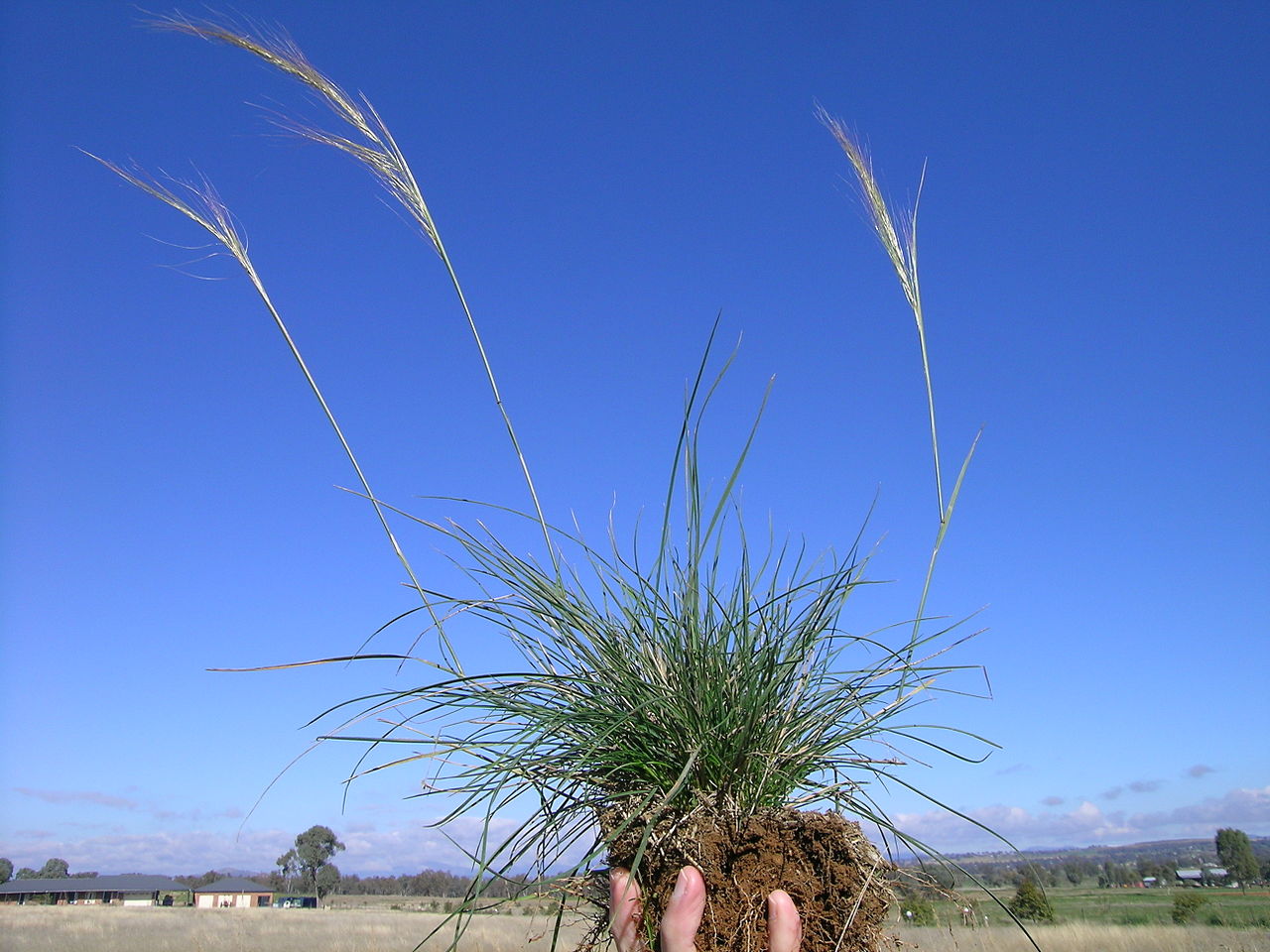
How it differs: Sharp, needle-like seeds with long twisted awns, and narrow, in-rolled leaves.
Not sure if it's Lovegrass?
Native tussock grasses can look similar. Run your finger along the leaf edge (ALG feels rough and 'sandpapery') and check for the white ligule hairs at the base. When in doubt, log it on the map or ask Landcare.